

Use this when
- You hired (or became) the first sales leader who will run people, not only a book.
- The board wants a “plan” before anyone has sat in on a call.
- Pipeline, CRM, and goals cannot be explained by the people who live in them.
- Marketing and CS each think sales is the problem, and sales thinks the reverse.
Do not use this when
- There are no customers and no motion. Stay in first ten and channel strategy.
- You need a compensation plan. Write sales compensation as its own page; do not bury pay in a 90-day slide.
- You need a forecast design. That is forecasting. This ramp uses those pages; it does not replace them.
Keep this in mind
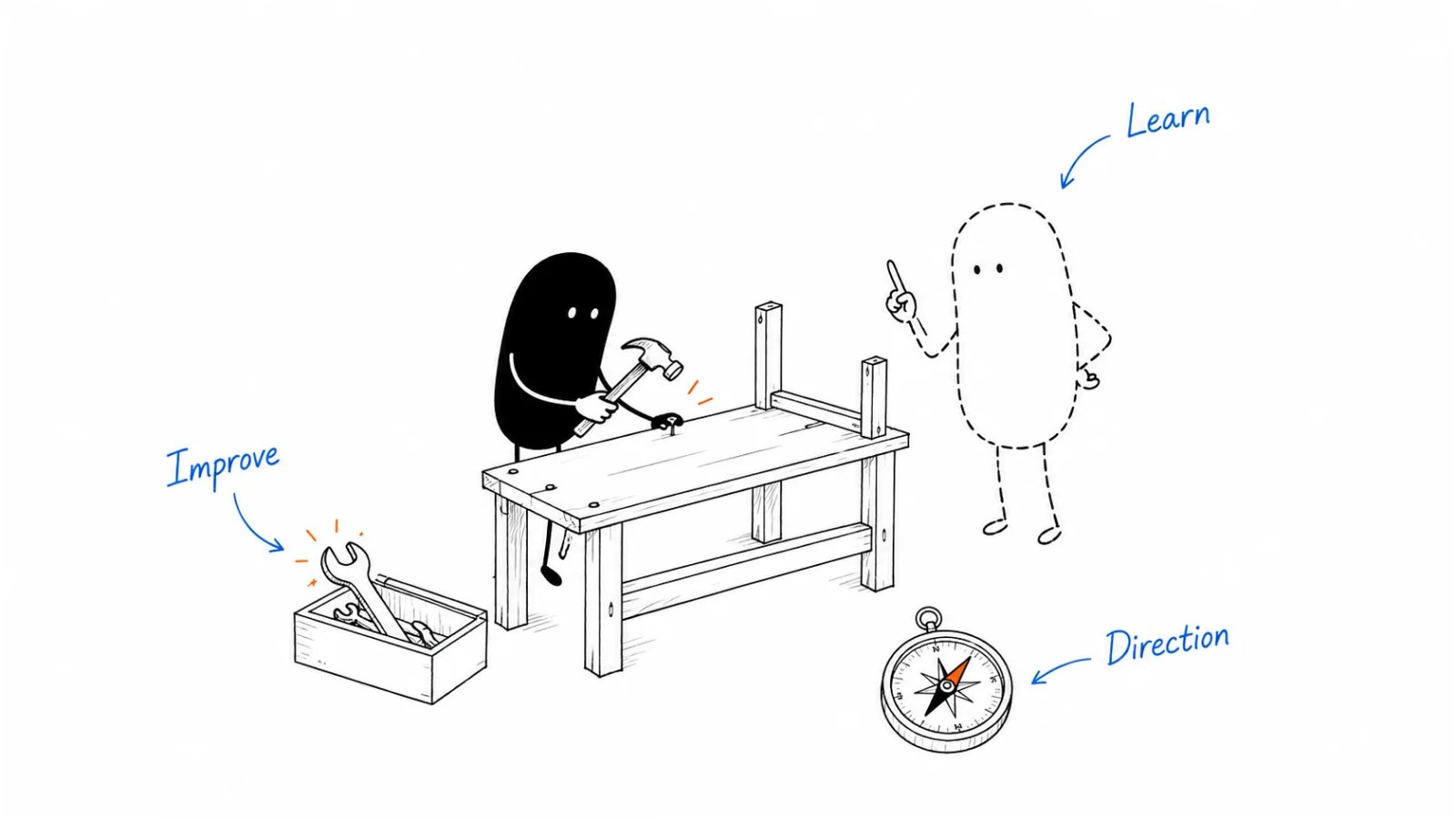
Days 1–30 you are not the hero. You are the auditor. Quick wins in days 31–60 come from what you actually saw—not from a generic org chart. Days 61–90 set a course with marketing and customer success, not a sales-only cave.How to do it
Step 1: Days 1–30: observe and learn
Meet internal stakeholders. Sit with the people who sell. Take product training like a new AE. Watch live calls and demos. Begin an infrastructure audit (CRM, enablement, dialer, MAP—what is actually used). Audit the goals and metrics on the wall versus the metrics in the forecast. Goal of the month: you can explain how a deal is born, worked, and credited without reading a wiki.Step 2: Days 31–60: make practical improvements
Audit the sales process as lived, not as slided. Review pipeline management against hygiene rules. Write or repair standards of performance (what “good” is when nobody is watching). Systems: what to stop, what to keep, what to integrate. Historical opportunities: where you win, where you lose, where you stall—by ICP slice, not by lore. Ship small: a stage-exit rule, a demo score, a meeting definition. Do not ship a new methodology brand.Step 3: Days 61–90: agree on direction
Align with marketing and CS on one number and one language for stages. Build a roadmap in months, not in slogans. Refine weekly / monthly / quarterly KPIs so they match forecasting and sales compensation. Strategy and recommendations go in writing to the people who can say no. Hire only if the audit said capacity is the constraint—see GTM planning. “Hire an SDR manager and more AEs” is a slide, not a finding.Step 4: Design the team around the work
Boxes (AE, SDR, SE, ops, enablement) exist to hit the target and the motion you named. Do not paste a VP-Sales org from a template. Span of control and overlay ratios are assumptions you will test in the capacity model.Step 5: Agree on leadership expectations
Write four lines you are willing to be quoted on. Useful ones: structure follows strategy; ICs get support; goals are clear and roles do not overlap by accident; you hire to the company’s values, not to a headcount wish. Delete sample values you would not defend in a 1:1.Worked example (illustrative)
First sales leader, eight people, outbound-assist. CRM is messy. Founder still takes two enterprise deals.Copy: 90-day plan (fill)
- Context (motion, headcount, what is already broken):
- 30: who you will sit with · which calls · which systems · which metrics to audit:
- 60: process / pipeline / performance standards / systems / win-loss—each with an owner:
- 90: alignment with marketing and CS · KPI set · roadmap horizon · hires only if the model says so:
- Org boxes you will not draw yet:
- Four principles you will publish:
Before you start
- This person is actually a sales leader, not a founder-seller in a new title.
- 30-day calendar is listening, not presenting vision.
- 60-day wins are visible in CRM or recordings, not in a narrative deck.
- 90-day course includes marketing and CS by name.
- Hiring is an output of GTM planning, not a template bullet.
- Compensation and forecast pages exist or are explicitly queued.
- Sample “guiding principles” from someone else’s deck were rewritten.
Metrics
Do not count slides delivered to the board in week two as ramp success.
Common mistakes
- Vision offsite before a single recorded call.
- Hiring to the org-chart slide.
- Ignoring CS and marketing until day 89.
- Replacing the CRM in month one as a personality move.
- Copying another VP’s 30-60-90 verbs without the audit.
- Treating this page as SDR ramp.
What to read next
The number people carry is sales compensation. Whether that number is real is forecasting. How the week splits pipe-gen, forecast, and coaching is sales operating cadence. Whether you can staff it is GTM planning. A new CS executive’s 90 days are CS-leadership ramp—not this page. How first meetings sound is the pitch and the demo. If the team is SDRs, their curriculum is SDR onboarding.Sources and evidence boundary
This is an owner-maintained operating synthesis. It is not a job description, not employment advice, and not a headcount model. The 30 / 60 / 90 verbs (observe and learn → quick wins → set the course), the audit list (stakeholders, team, product, infrastructure, calls, goals), the 60-day process/pipeline/standards/systems/win-loss block, the 90-day alignment and hire caution, and “org follows strategy” are distilled from an operator VP-Sales 30-60-90 deck (8 slides). That file is a method prompt, not a source to copy. Its sample org boxes, sample values, and “hire SDR manager / more AEs” bullets are not imported as a required plan.Copyright © 2026 Ivan Xu. All rights reserved. See the copyright and reuse terms. Canonical source: github.com/weilun88313/B2B-Playbook